What Are Marketing Objectives?
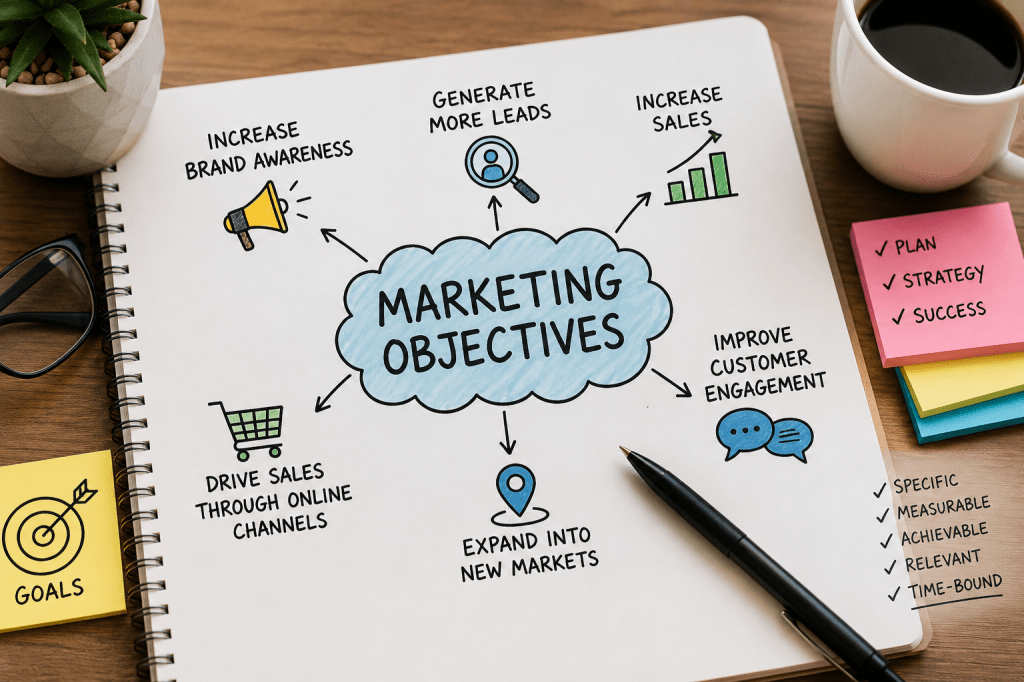
Marketing objectives are the goals a company sets to help guide its marketing efforts and support overall business growth. These goals give teams a clear direction and help them focus on what they are trying to accomplish. Common marketing objectives include increasing brand awareness, growing sales, gaining market share, entering new markets, improving customer engagement, and increasing online sales (Kotler & Keller, 2016).
Without clear objectives, businesses can end up spending time and money on activities that do not contribute to their overall success. Many companies use SMART goals when developing marketing objectives, which means the goals are specific, measurable, achievable, relevant, and time-bound (Corporate Finance Institute [CFI], n.d.). Having clear objectives makes it easier to prioritize marketing activities, track progress, and determine whether marketing efforts are producing results.
Marketing Objectives in Action: Booked & Branded
For my proposed business, Booked & Branded, marketing objectives help keep the company focused on its mission of helping independently owned event venues and hospitality businesses grow through affordable and personalized digital marketing services. The goal is to help small businesses increase their visibility, attract more customers, and ultimately generate more bookings without needing a large internal marketing team.
Some examples of marketing objectives for Booked & Branded include increasing brand awareness by 40% during the first year, gaining 25 recurring clients within the first 12 months, and increasing client engagement rates by 30% through social media and short-form video content. These goals provide clear benchmarks for success and help determine whether the company’s marketing efforts are delivering meaningful results.
Aligning Marketing Activities With Business Goals
Marketing objectives should support the overall mission and goals of a business. When marketing activities align with what the company is trying to achieve, it becomes much easier to make decisions, stay focused, and measure success.
For Booked & Branded, the mission is to help small event venues and hospitality businesses increase customer engagement and generate more bookings. Because of that, marketing activities should focus on strategies that demonstrate real results. Social media management, short-form videos, customer testimonials, case studies, and educational content can all help showcase success while increasing visibility and attracting new clients.
When marketing objectives and business goals work together, companies can better prioritize their efforts, invest resources wisely, and ensure their marketing activities are contributing to long-term growth.
Marketing Activities That Support Objectives
Companies use a variety of marketing activities to help achieve their goals. Some common examples include digital advertising, social media campaigns, content marketing, email marketing, influencer partnerships, search engine optimization (SEO), and customer referral programs (Kotler & Keller, 2016). The key is choosing activities that support the company’s objectives and connect with the target audience.
For Booked & Branded, marketing efforts would focus heavily on platforms such as Instagram, TikTok, Facebook, and YouTube. These channels are ideal for showcasing visual content, highlighting client success stories, and connecting directly with potential customers. Since event venues and hospitality businesses rely heavily on visuals and customer experiences, social media and short-form video content would be powerful tools for attracting new clients. By selecting marketing activities that align with the company’s goals, Booked & Branded can make the most of its marketing budget while building awareness and growing its client base.
Legal Considerations in Marketing Objectives
When developing marketing objectives, organizations must consider legal responsibilities. Companies must comply with advertising regulations, copyright laws, privacy requirements, and disclosure guidelines for sponsored content. Marketing objectives should never encourage activities that mislead consumers or violate industry regulations.
For Booked & Branded, legal compliance would include protecting client information, respecting copyright ownership of creative content, obtaining permission for user-generated content, and ensuring proper disclosure of paid promotions and partnerships.
Ethical Considerations and Customer Trust
Ethics are just as important as legal requirements when setting marketing objectives. The American Marketing Association (AMA) encourages marketers to be honest, transparent, fair, respectful, and responsible in their business practices (American Marketing Association, n.d.).
Companies should make sure their marketing goals support truthful communication and treat customers fairly. For Booked & Branded, that means providing clients with honest analytics reports, accurately sharing campaign results, and being transparent about advertising and marketing practices. By operating ethically, businesses can build trust, strengthen their reputation, and create long-term relationships with customers and clients.
Conclusion
Marketing objectives provide a roadmap for business success. They help companies stay focused, measure progress, and ensure that marketing efforts support the overall mission and goals of the organization. Whether the goal is to increase brand awareness, generate more sales, gain market share, enter new markets, or improve online engagement, having clear objectives gives teams direction and helps keep everyone working toward the same outcomes.
When businesses establish measurable goals and follow strong legal and ethical practices, they are better positioned for long-term growth. Clear objectives not only help drive results but also build trust with customers, clients, and other stakeholders.
References
American Marketing Association. (n.d.). AMA statement of ethics. AMA Statement of Ethics
Corporate Finance Institute. (n.d.). SMART goals. Corporate Finance Institute (CFI): #1 in Finance Skills & Certifications
Kotler, P., & Keller, K. L. (2016). Marketing management (15th ed.). Pearson.


Leave a Reply