We must have a thing with AC units… because no matter where we move, they somehow find a way to cause chaos. In our last house, the unit was so far away from the primary bedroom that it was always either freezing or way too hot, depending on the season. So when we moved into this new place, we crossed our fingers that HVAC wouldn’t be a problem.
Whelp… that didn’t last long.
The First Night Reality Check 😳
The very first night in our new bedroom, we both turned to each other and said:
“Oh my god… is it really that loud?”
It was.
We placed our hands on the wall—and we could feel the vibration. Not just a hum… a full-on buzz. It was absolutely nuts!
Step One: Call in the Pros
Like any good homeowner, our first instinct was to get it checked. We had three separate inspections, and each time the verdict was the same:
“Everything’s working fine!”
And of course, it never sounded that loud when the tech was there. 🙄
Step Two: Try, Try, Try Again
✅ Fix #1: Rubber Mulch + Vibration Pads
Vibration Pad for HVAC we used: https://tr.ee/kk2VEH
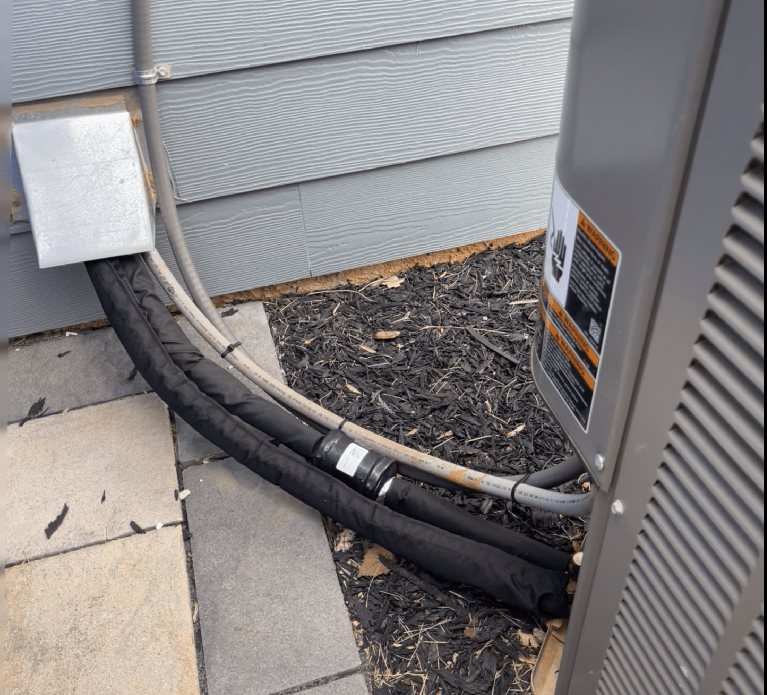
We replaced the large river stones surrounding the unit with rubber mulch to reduce the chance of vibration bouncing off the rock and into the house. We also added vibration pads underneath the unit itself to soften any low-frequency rumbling.
Result: Helped a little. But not enough.
✅ Fix #2: Insulating the Lines
Insulated Pipe Wrap: https://tr.ee/Lq8hm1
We secured and insulated all the trunk lines, wiring, and pipes running from the unit into the wall.
Result: Another small improvement—but not the solution we needed.
The Breakthrough: Acoustic Panels
After way too many late-night YouTube rabbit holes, we started looking into ways to dampen the wall itself, rather than fighting the HVAC unit.
We always dreamed of doing a barnwood or shiplap accent wall, but to make it effective as a sound barrier, we’d need to install an underlayment first—driving up the cost and time. Just not worth it.
Then we found Tonor Acoustic Panels.
These are stylish, adhesive-backed sound-dampening panels that people were raving about for podcast studios, noisy apartments, and more.
Step-by-Step: Installing Tonor Acoustic Panels
Want to try it yourself? Here’s what you’ll need and how we did it:
🛠️ What You’ll Need:
- ✅ Tonor Acoustic Panels
- ✅ Painter’s tape or laser level
- ✅ Measuring tape
- ✅ Pencil or chalk line
- ✅ Scissors or a sharp utility knife
- ✅ A second person (trust us, it helps!)
- ✅ Optional: spray adhesive or command strips for repositioning

The before image of the “vibrating” wall
🧱 Installation Steps:
Step 1: Plan your layout.
Decide if you want a geometric layout, stacked hexagons, or a straight grid. We sketched ours out on paper first.
Step 2: Mark your wall.
Use painter’s tape or a laser level to make sure your panels will line up correctly. Our wall wasn’t square, so this part was key.
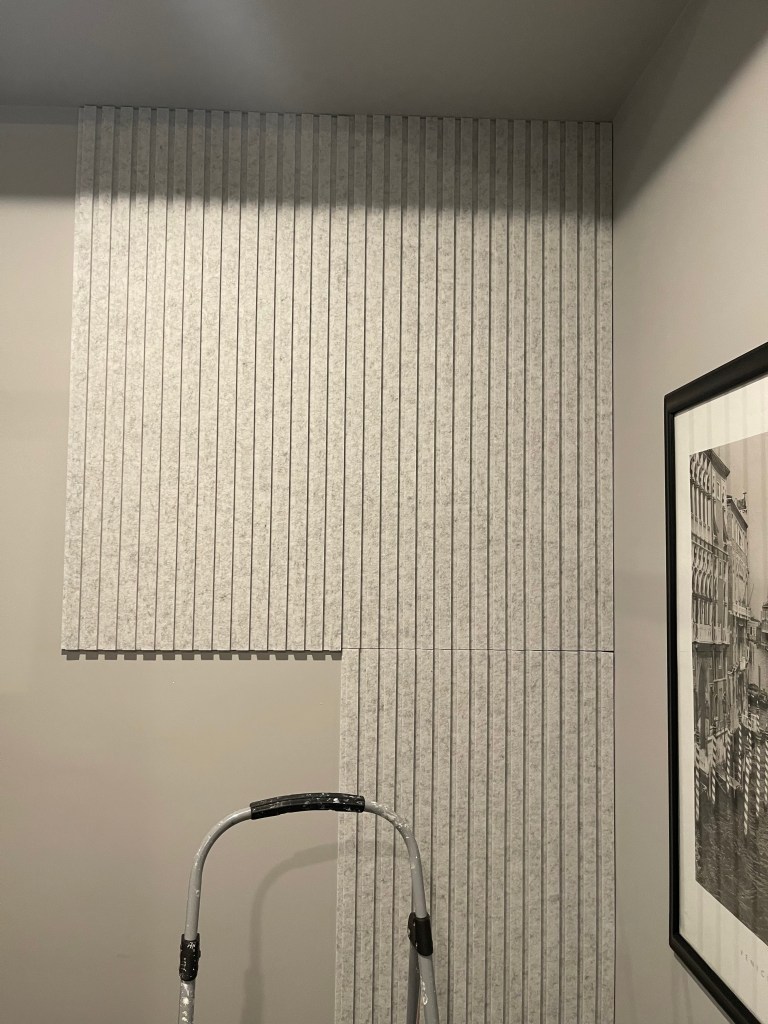
We noticed there was a little variance between the panels
Step 3: Test a few panels first.
Hold a few panels on the wall before peeling the adhesive backs. Make sure the color and layout look right.
Step 4: Peel and press!
Carefully peel the backing and apply each panel firmly. Press and hold for a few seconds to ensure strong adhesion.
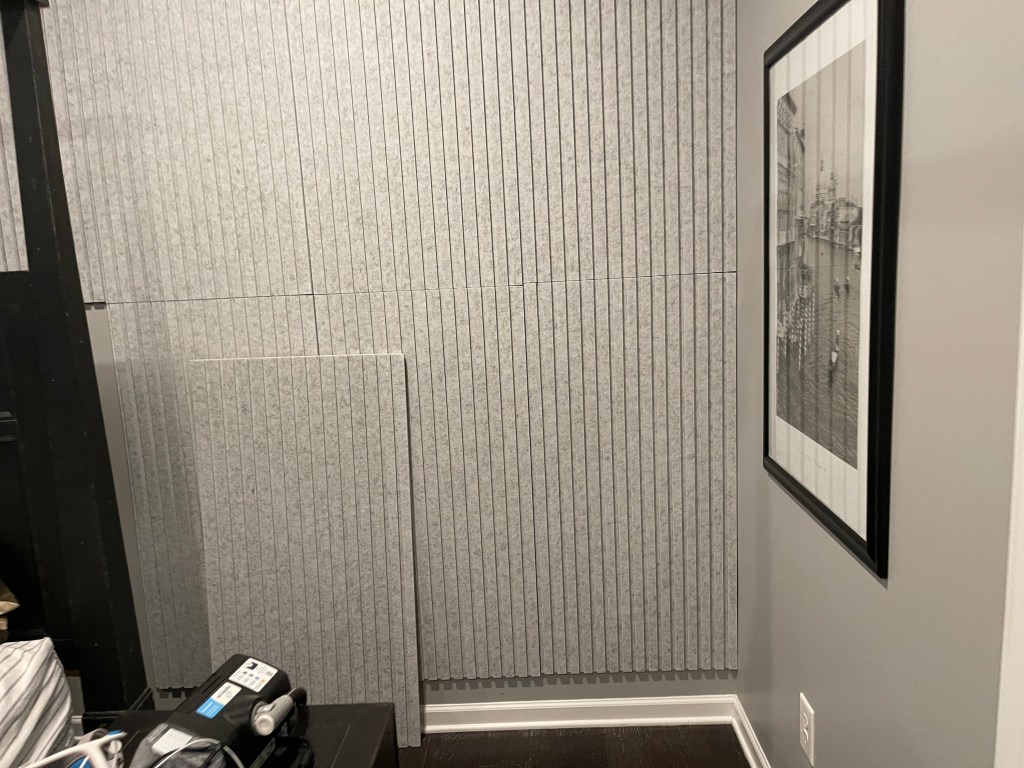
Overall, we love the look but we had to work through the gappage!
Step 5: Fill in the gaps.
Use scissors or a utility knife to trim edge pieces to size. We had very minor gapping, but it blended in well!
Step 6: Step back and admire.
The wall looked amazing—and it worked! The noise was dramatically reduced.
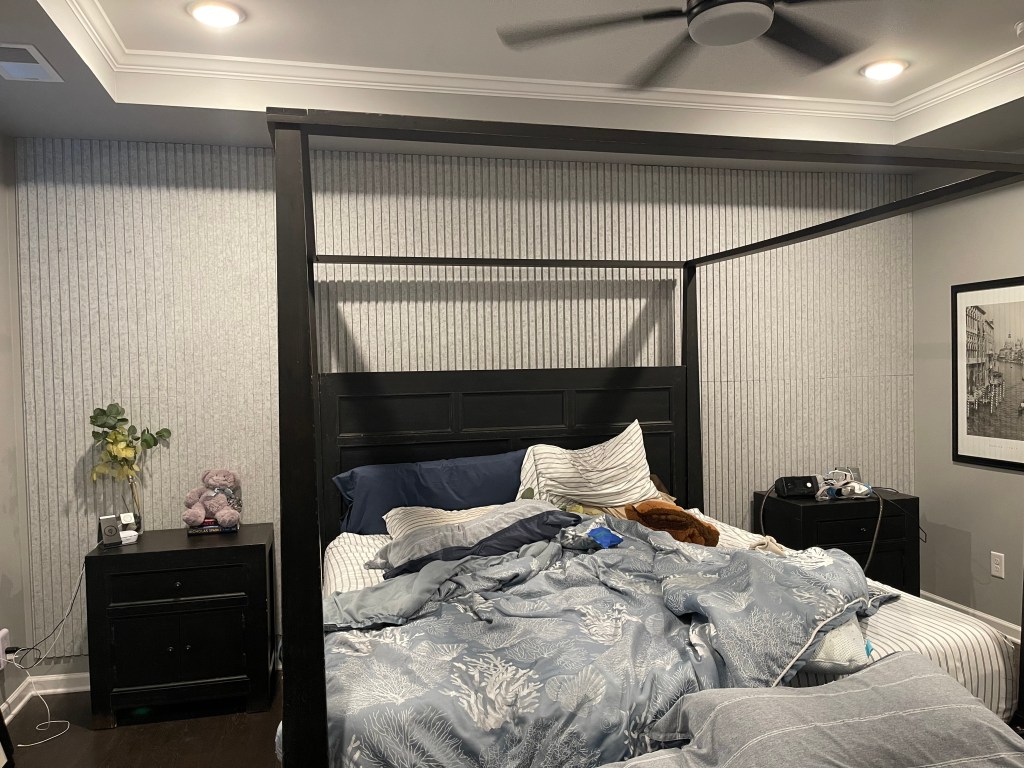
Don’t mind the messy bed, we had to move everything around!!
The Final Result: Stylish & Quiet 🎉
The end result? It looks amazing—like a custom accent wall.
But more importantly:
The sound difference is INSANE.
That wall no longer buzzes. The bedroom is calm, quiet, and cozy. We actually look forward to going to bed without worrying about HVAC noise keeping us up.
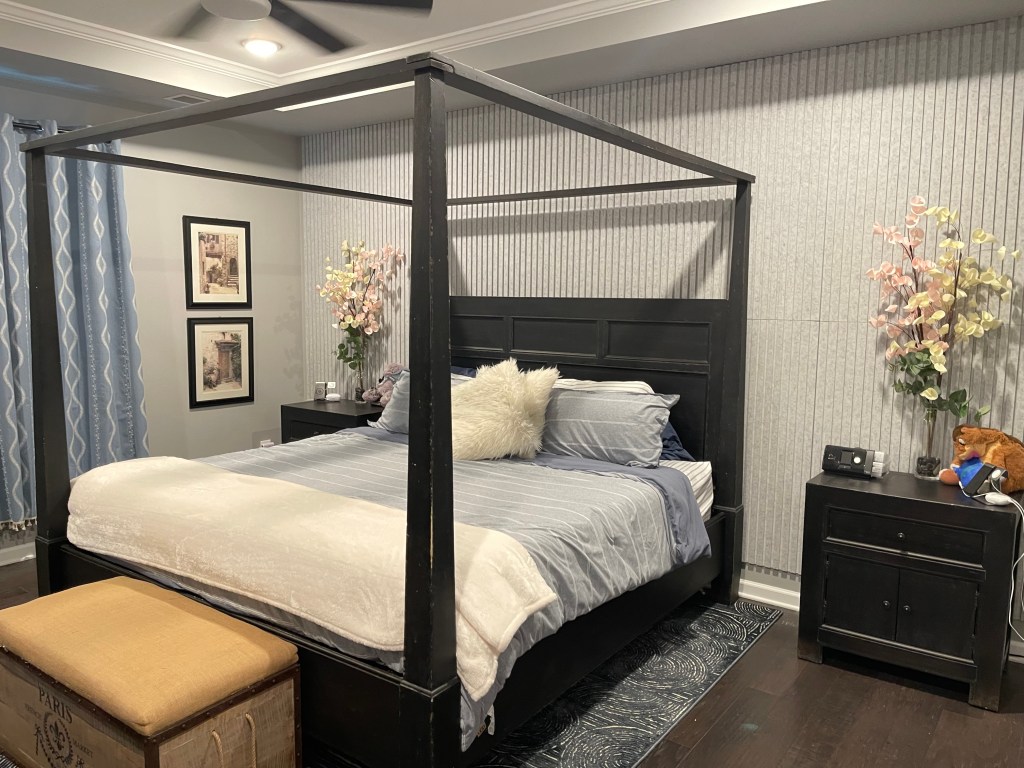
The final final, lol! Gave me an excuse to rework the whole room…
Would We Recommend Tonor Panels?
Absolutely YES.
They’re budget-friendly, easy to install, and gave us both peace and style. If you’ve got a noisy room—or just want a cool wall feature—these panels are so worth it.
Thanks for following along with our bedroom glow-up! Let us know in the comments if you’ve tried something similar—or if you’re dealing with an annoying HVAC noise too. We’d love to hear how you solved it!
💬 Don’t forget to subscribe to the blog for more DIY makeovers, design hacks, and lifestyle content from Simply Styled by Kat!
 Site Title